Integrating Solar, Energy Storage and Smart Energy Management
Integrated energy solutions are bringing solar generation, energy storage and intelligent controls together to improve energy utilization, operational resilience and long-term system performance.
From Solar Generation to Integrated Energy Systems
Solar PV is increasingly becoming one component of a broader energy strategy rather than a standalone source of electricity.
For commercial and industrial facilities, the challenge is not simply to generate renewable energy. The greater opportunity is to coordinate generation, consumption, storage, backup power and intelligent controls so that available energy can be utilized more effectively.
This is driving the development of increasingly integrated energy solutions.
Solar PV as the Generation Platform
Solar PV can provide a strong foundation for reducing daytime grid energy consumption and supporting long-term energy cost management.
However, system performance depends on more than installed solar capacity. Load profiles, available installation area, operating hours, electrical infrastructure and energy utilization patterns all influence how a system should be designed.
Effective solutions therefore begin with understanding how and when energy is actually consumed.
Adding Energy Storage
Battery Energy Storage Systems can introduce another layer of flexibility.
Depending on the application and system design, storage can support functions such as energy shifting, backup capability, peak-load management and improved utilization of locally generated renewable energy.
The appropriate storage capacity should be determined by the operational objective rather than simply maximizing battery size.
Hybrid Energy Architecture
Hybrid systems can connect multiple energy sources and operating modes within a coordinated architecture.
Solar PV, battery storage, the utility grid and backup generation can potentially work together to provide greater operational flexibility and resilience.
The engineering challenge is to determine how these resources should interact under normal operation, changing loads and different power-source conditions.
Intelligent Energy Management
The next stage is increasingly about intelligence.
Monitoring, controls and energy management technologies can provide visibility into generation, consumption and system performance while enabling more coordinated operation.
This creates a progression from:
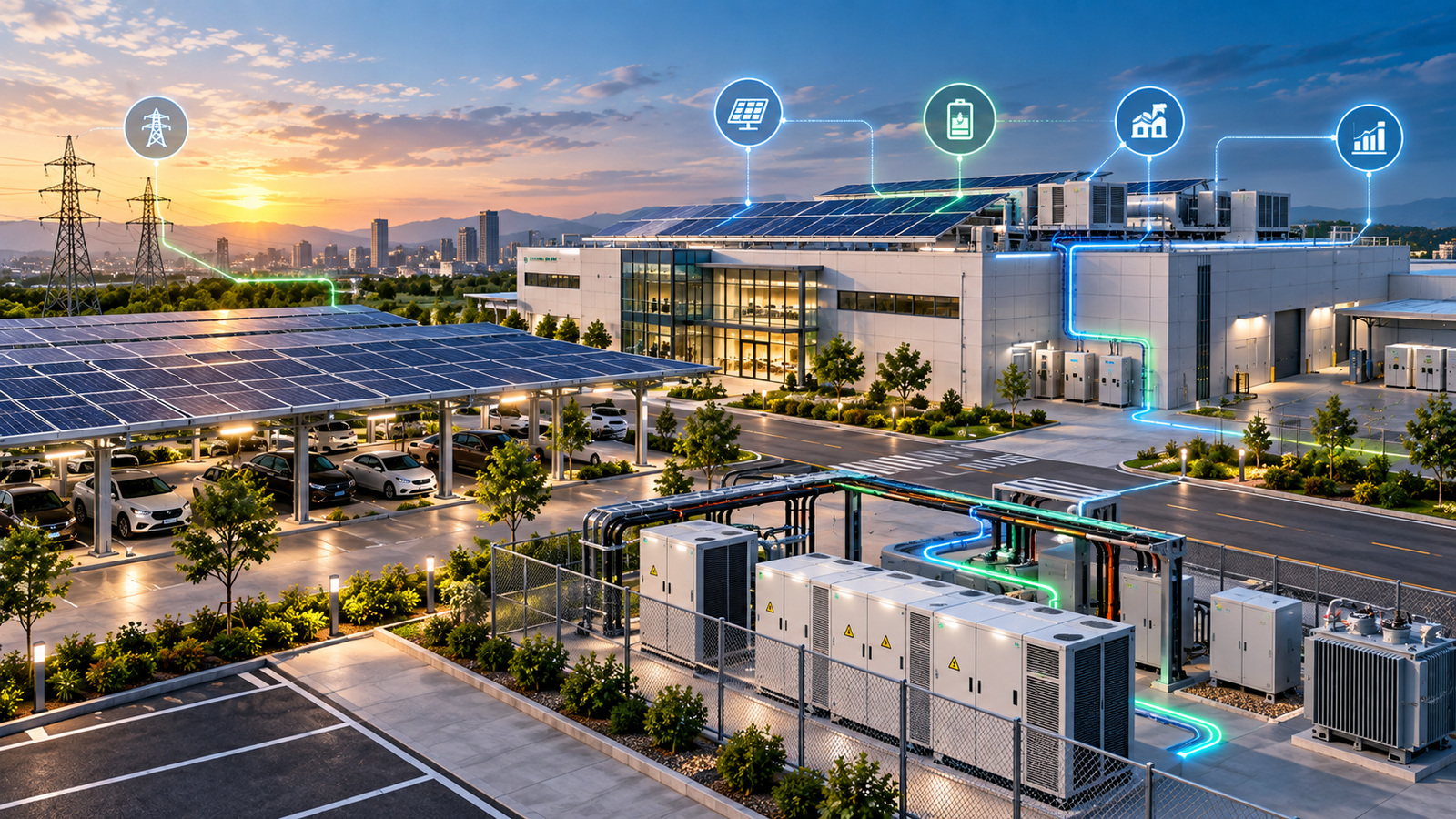
GENERATION → STORAGE → CONTROL → INTELLIGENT ENERGY MANAGEMENT
Designing Around the Application
There is no single energy configuration suitable for every facility.
A commercial building, industrial plant, warehouse, data facility or infrastructure project can have significantly different load characteristics and operational priorities.
System architecture should therefore be developed around the actual application, with consideration for factors such as energy consumption, load profile, resilience requirements, available infrastructure and future expansion.
Building Smarter Energy Systems
The future of distributed energy is increasingly integrated.
Combining renewable generation, energy storage, hybrid architectures and intelligent energy management can create systems designed not only to generate electricity, but to improve how energy is produced, stored, controlled and utilized.
For Mecsol Group, this convergence represents an important connection between energy, engineering and digital technologies.
SMARTER ENERGY. STRONGER RESILIENCE.