
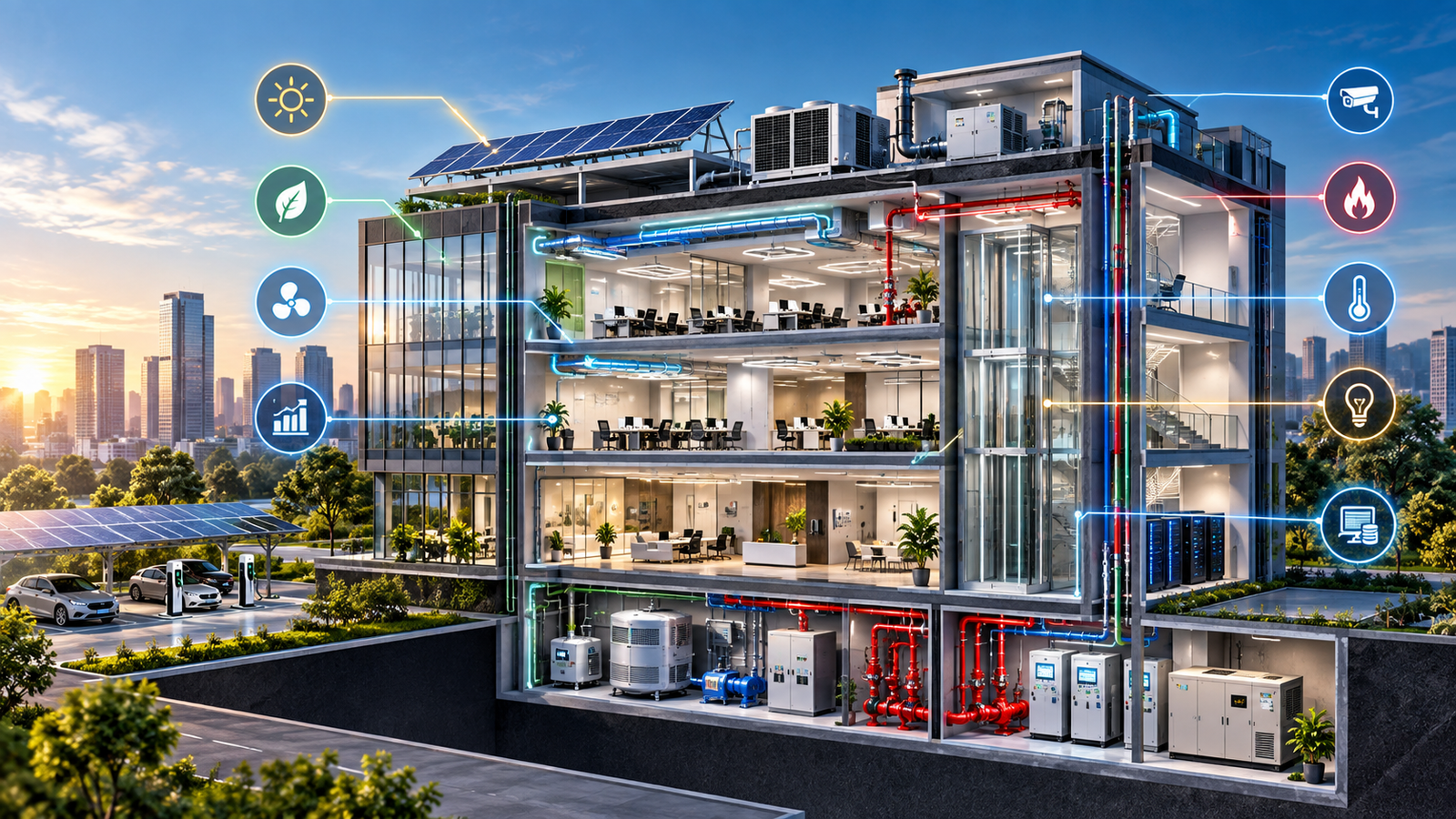
The Future of Buildings Is Connected, Intelligent and Energy Efficient
Buildings are evolving from isolated physical systems into connected environments where engineering, automation, energy and digital technologies work together to improve performance, efficiency and resilience.
From Building Systems to Connected Environments
The built environment is undergoing a significant transformation. Mechanical, electrical, HVAC&R, fire and life safety, security, energy and digital systems have traditionally been designed and operated as separate disciplines.
Increasingly, however, buildings are becoming connected environments where these systems can interact, exchange information and support more intelligent operation.
This transition is creating opportunities to improve not only building performance, but also the way facilities are monitored, maintained and managed throughout their lifecycle.
Connecting Engineering with Intelligence
Building automation and digital technologies are creating a bridge between physical infrastructure and intelligent operation.
Building Management Systems, sensors, IoT technologies, connected controls and data platforms can provide greater visibility into how building systems are performing.
When properly integrated, these technologies can help operators identify inefficiencies, respond to changing conditions and make better-informed operational decisions.
Energy Is Becoming Part of the Building Intelligence Layer
The growth of distributed energy technologies is further changing the role of buildings.
Solar PV, battery energy storage, hybrid energy systems and intelligent energy management can increasingly operate alongside conventional electrical infrastructure.
Rather than treating energy generation, consumption and backup as completely separate functions, integrated approaches can support greater efficiency, resilience and control.
Safety, Security and Comfort Remain Fundamental
Smart buildings are not simply about adding more technology.
The fundamental objectives remain practical: creating environments that are safe, comfortable, reliable and efficient.
Fire and life safety, HVAC&R, security and surveillance, electrical systems and building automation must therefore work within a coordinated engineering framework.
Technology creates the greatest value when it strengthens these fundamental building functions rather than adding unnecessary complexity.
From Smart Buildings to Smart Infrastructure
The same principles are increasingly extending beyond individual buildings.
Connected technologies, distributed energy, intelligent controls and data infrastructure can support campuses, industrial facilities, communities and wider urban infrastructure.
This creates a pathway from smart homes and smart buildings toward smarter infrastructure and cities.
Looking Ahead
The future of the built environment will increasingly depend on the ability to connect engineering disciplines with digital intelligence.
For companies operating across building technologies, energy and digital systems, this convergence creates opportunities to develop more integrated solutions that improve efficiency, connectivity, resilience and long-term performance.
ENGINEERING + TECHNOLOGY + INTELLIGENCE